

For the past year, Britain’s left, progressive, and centrist political establishment has been gripped by one question above all else: how to stop Nigel Farage from taking power at the next general election. Their fears are not unfounded. Farage’s outfit, Reform UK,
has led 190 of the 192 national opinion polls conducted since April 2025, often by a margin large enough to secure the party an absolute majority in the House of Commons. Reform UK stormed the recent local elections, winning seats not just in traditional conservative heartlands or working class towns skeptical of immigration; the party also achieved an unprecedented victory in Wales, a country known for its left-wing political culture.
Characteristically for a populist insurgent force, Reform’s specific policy proposals are vague. The party has attempted to appeal to statist, working class, traditional Labour voters by avoiding the appearance of a Thatcherite economic policy, despite otherwise right-wing positions on welfare and disability benefits. Yet on immigration, net zero, and other social issues, Reform is unambiguous. The party has pledged a deportation program modeled on Donald Trump’s “ICE”, has aimed for negative net migration figures, and has pledged to scrap any commitments pertaining to the mitigation of climate change or the pursuit of Net Zero energy policies.
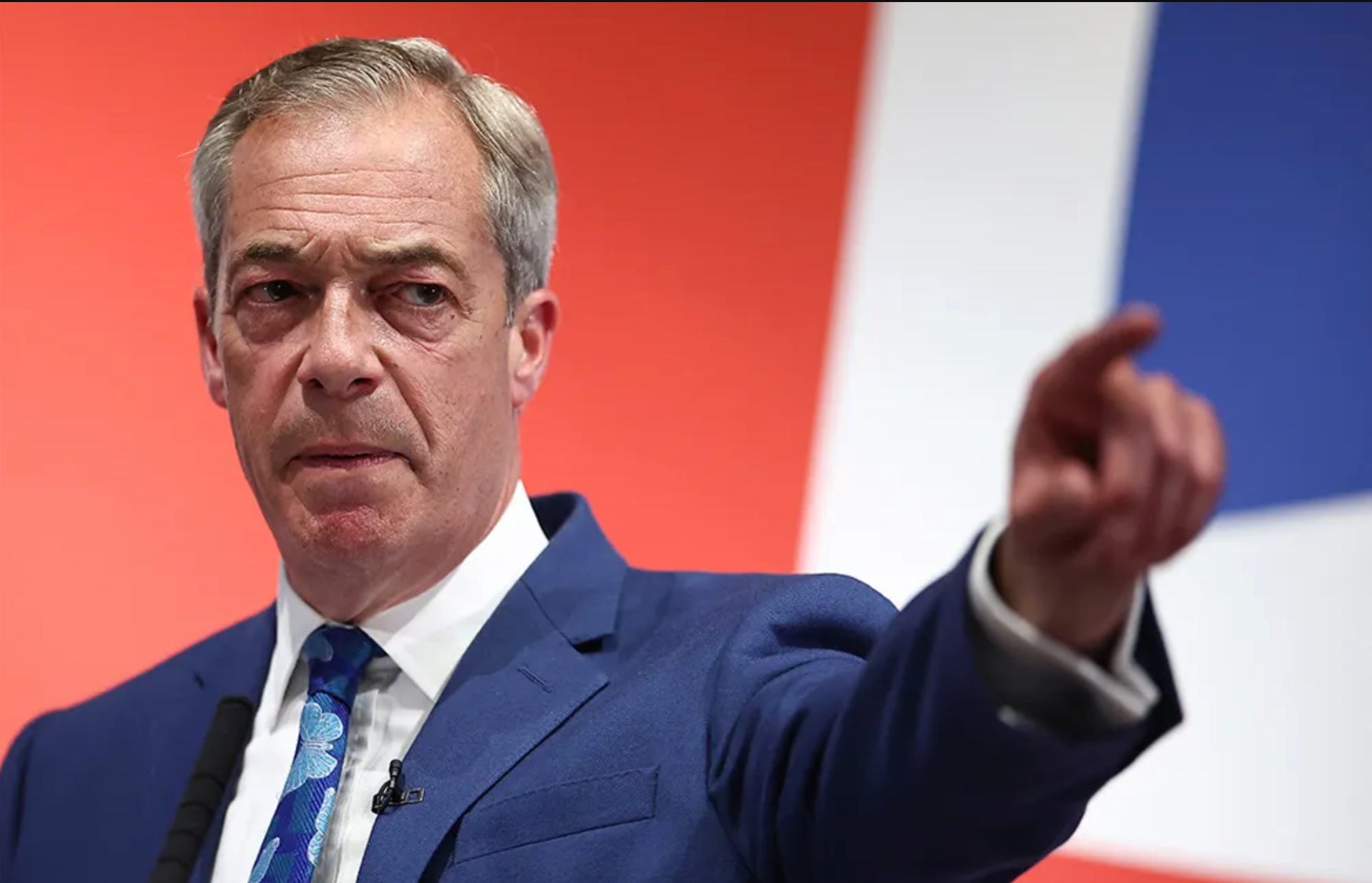
It is reasonable for progressive voices to seek to prevent Nigel Farage from becoming Britain’s Prime Minister. Yet what is overlooked by most political commentators is the extent to which we are already living in Nigel Farage’s Britain. We just haven’t realized it yet.
Britain is more polarized than ever before. Where a stable two-party system dominated from World War II, opinion polls since 2025 have demonstrated that there exist five viable national parties, with Reform leading the pack. And yet, the only thing Britons across the political spectrum seem to agree on is that the country is paralyzed by dysfunction.
The centre-right political commentator Robert Colville proclaimed on Times Radio last month that “We’re just not a serious country”. According to Zack Polanski, leader of the insurgent left-wing Green Party, “we live in rip-off Britain”. Not to be outdone, the unflinchingly opportunist Robert Jenrick, formerly of the Conservative Party but more recently a leading figure in Reform UK, declared in his defection speech that “Britain is Broken”.
Upon Keir Starmer’s inevitable forthcoming resignation, Britain will be on its seventh Prime Minister in the space of a decade. That is, quite simply, completely unprecedented. Britain’s chronic political instability is a direct result of Nigel Farage, a man who easily qualifies as the most influential and powerful British politician since at least 2010.
Throughout David Cameron’s initial term as Prime Minister (2010-2015), fear of UKIP (Farage’s previous outfit) loomed large, with the latter regularly polling at 20% or more. In attempting to collapse UKIP’s support, Cameron made the faustian pact which would be his undoing: a promise for a referendum on membership of the European Union. That promise led directly to his own resignation. Theresa May’s resignation in May 2019 came on the heels of the Conservative vote collapsing at the hands of Farage’s latest vehicle, the Brexit Party, which (stormed to victory in the 2019 European elections. Boris Johnson’s downfall, while partly a consequence of the Partygate scandal, was also a reaction to the Conservative base’s right-wing lurch, a phenomenon which, as we have seen, was a direct result of Farage’s handiwork. Johnson was seen by large swathes of conservatives as insufficiently right-wing on questions of tax, spend, and immigration, deficiencies endlessly harped on by Farage. Thus, Liz Truss’s victory and brief premiership was predicated on “cutting taxes” irrespective of the costs, causing an economic crisis and her own resignation. Her successor, Rishi Sunak, lived in Farage’s shadow throughout his time as Prime Minister. His self-imposed pledge to “stop the boats” led him to appoint Suella Braverman as Home Secretary. Braverman’s well-known cruelty towards asylum seekers was not to be outdone by her de-facto deputy, Robert Jenrick (another Sunak appointee), who ordered murals of Mickey Mouse at asylum centers to be painted over, lest the UK be seen as “too welcoming” for refugee children. Sunak, of course, would lead his party to a cataclysmic defeat at the 2024 general election, a defeat made immeasurably worse by Reform’s siphoning off of millions of Tory votes.
They never learn, and neither did Keir Starmer, who made slashing immigration a bedrock of his premiership. Starmer, at least, did so successfully, with net migration in the year ending June 2025 falling to 204,000 (following a peak of approximately one million in 2022). Yet his party averages double digits behind Reform UK in the polls, and were it not for the electoral disaster visited upon Labour by Reform last week, it is unlikely that he would be forced to resign.
Farage’s shadow has loomed over British politics since 2010. It has been the central dynamic in the downfall of every single Prime Minister in that time. Perhaps more alarmingly, Farage has been the most influential policymaker in Britain in that time too. His cause celebre, Brexit, was the singular focus of the British Government from 2016 to 2020. It cost the country at least fifteen billion pounds in ‘divorce fees’ alone. As of early 2026, the UK’s GDP is estimated to be 6-8% lower than pre-brexit forecasts, while UK business investment is estimated to be, on average, 18% lower. Successive UK governments from 2022 onwards (four and counting) have made economic growth a priority. The quickest way to do so would be to rejoin the European Union’s economic institutions (the single market and customs union, for example), which would require taking on Farage on his signature issue. So far both major parties have shown extreme reluctance to do so.
In 2022, Andrew Adonis described Nigel Farage as the “de-facto leader of the Conservative Party”. Adonis was ahead of his time but ultimately undersold the proposition - Nigel Farage has, more accurately, been the United Kingdom’s de-facto Prime Minister.